+44 (0)1488 73322


If there’s one part of the horse’s body that quietly influences almost everything, it’s the hind gut. Everything from condition, behaviour, performance, comfort, and even immunity can be impacted by hind gut health.
Many digestive issues we deal with as horse owners aren’t hugely dramatic. They can be subtle, recurring, and frustrating. Things like inconsistent droppings, gassiness, poor fibre utilisation, weight challenges, or that general sense that your horse is “not quite right”. It is most likely that the hindgut is involved.
The hindgut is your horses in-built fermentation system and it is of huge importance to your horses health. It includes the caecum and colon and it’s primary function is to break down fibre, the forage that should make up the majority of your horse’s diet.
But it is important to remember that horses can’t digest fibre on their own. They rely on billions of microbes within the hindgut to do the work. This microbe population break down plant cell walls, produce energy‑rich volatile fatty acids, support vitamin production, help regulate hydration, can influence behaviour and comfort and play an important part in effective immune function
When the hindgut is balanced and functioning well, horses thrive. When it’s disrupted, you start seeing the small but persistent issues that so many owners recognise.
The microbial population in the hindgut is incredibly sensitive. Even small changes can throw it off balance. Changes such as stress (travel, competition, herd changes), changes in feeding, high starch/cereal diets, poor quality forage and even old age.
When the microbial balance shifts, fibre isn’t digested properly. Undigested material can ferment incorrectly, producing excess gas, discomfort, and inconsistent droppings. Nutrient absorption drops, and horses may lose condition or become harder to keep weight and condition on
This is why hindgut support isn’t just for horses with known digestive problems. It is relevant to almost all domesticated horses.
The common signs of hindgut imbalance can be quite easy to recognise. They can include, loose or variable droppings, excessive gassiness, lack of appetite, difficulty maintaining condition, a dull coat, reduction on performance, mild behavioural changes and signs of discomfort. If any or all of these sound familiar, supporting the hind gut can help make a difference.
Understanding what the hindgut needs to work effectively is important:
- Think about fibre first
Forage should be the foundation of your horses diet. Consistent, good‑quality fibre keeps the hindgut microbes fed and the environment within the hindgut stable.
- Keep starch and sugar low
High‑starch and High sugar feeds can overwhelm the foregut, allowing undigested starch to reach the hindgut, where it ferments rapidly and disrupts pH.
- Make any feed changes gradually
The microbes within the hindgut adapt slowly. Sudden changes can cause temporary imbalance.
- Reduce stress where possible
Routine, turnout, and consistent management all help maintain microbial stability.
- Support microbial populations directly
This is where targeted supplements come in, specifically those proven to support fibre‑digesting bacteria and stabilise hindgut pH.
Simple Targeted Supplementation
Simple, targeted supplementation can provide effective support for the microbes in the hind gut, helping to maintain a stable environment. At Boomerang Nutrition, we have kept it simple. Yea‑Sacc 1026 is a live yeast culture based on the Saccharomyces cerevisiae strain 1026. This strain has been extensively scientifically researched and evaluated and its proven benefits align directly with the needs of the hindgut:
Enhanced fibre digestion: Yea‑Sacc stimulates fibre digesting (cellulolytic) bacteria, helping your horse extract more nutrition from forage.
Stabilised hindgut pH: It helps reduce lactic acid accumulation, preventing the pH drops that lead to discomfort and microbial imbalance.
Improved microbial environment: Research has shown that it encourages a favourable hindgut ecosystem which in turn supports consistent digestion.
Ideal for horses with increased digestive demands: Older horses, broodmares and performance horses often show the most noticeable improvements.
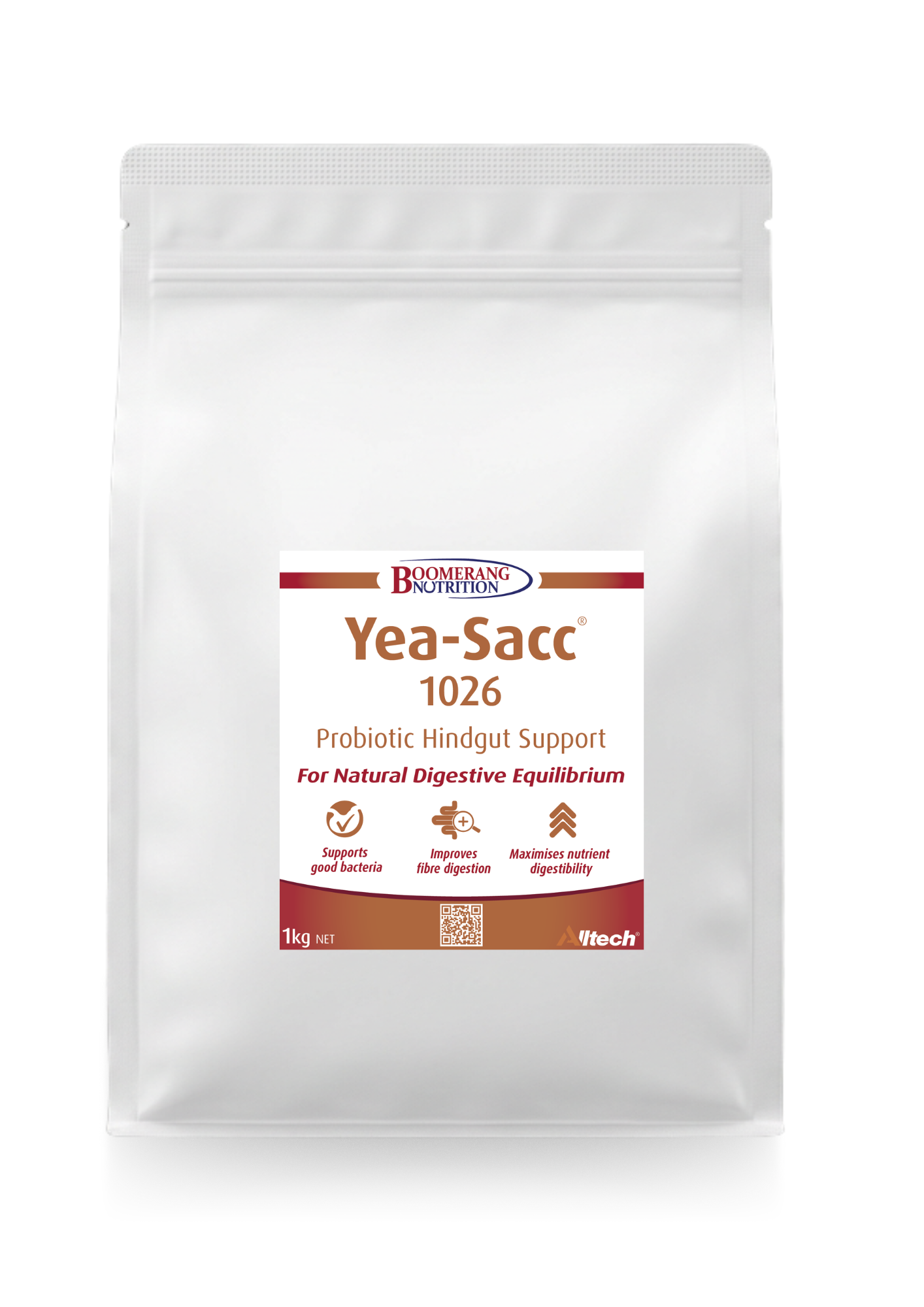
Yea-Sacc 1026
The Boomerang Nutrition Yea‑Sacc 1026 is exactly that, simply the pure strain 1026. Absolutely no fillers and no blending, just the targeted yeast culture that is supported by research.
Need some advice?
If you have any questions about your horses hindgut health or if you would like dedicated advice on your horses diet, we are always happy to help.
01488 73322 info@boomerangnutrition.co.uk